Are Passive House Worth It? Why It Goes Beyond Building Regulations in Ireland
Building regulations in Ireland have come a long way. New homes today are more insulated, less draughty, and far more energy efficient than anything built even 15 or 20 years ago. The improvements have been significant and real.
But despite this progress, there remains a clear and measurable gap between what current regulations require and what is achievable when a home is designed and built to the Passive House standard.
So is Passive House actually worth it? Or are building regulations now good enough?
At Daniel Mihoc Construction, we work across residential, commercial, healthcare, and education sectors, and we have seen firsthand how the principles of Passive House design deliver superior performance, lower running costs, and healthier indoor environments for the people who live and work in these buildings.
In this blog, we break down what Passive House actually means, how it compares to current building regulations in Ireland, and why it may be the smartest investment you can make in a new build.
What Is Passive House?
The Passive House standard was developed in Germany and is widely regarded as the gold standard for operational energy efficiency in buildings anywhere in the world. It is not an experimental building method or an extreme approach to construction. It is a carefully engineered system that balances performance, comfort, and affordability.
The standard represents a calculated sweet spot. The requirements are high enough to dramatically reduce heating demand, but not so extreme that construction becomes impractical or unaffordable for mainstream projects.
Decades of research and refinement have gone into the standard so that each requirement delivers meaningful energy savings without pushing costs into diminishing returns. Every element has been tested, measured, and proven across thousands of certified buildings worldwide.
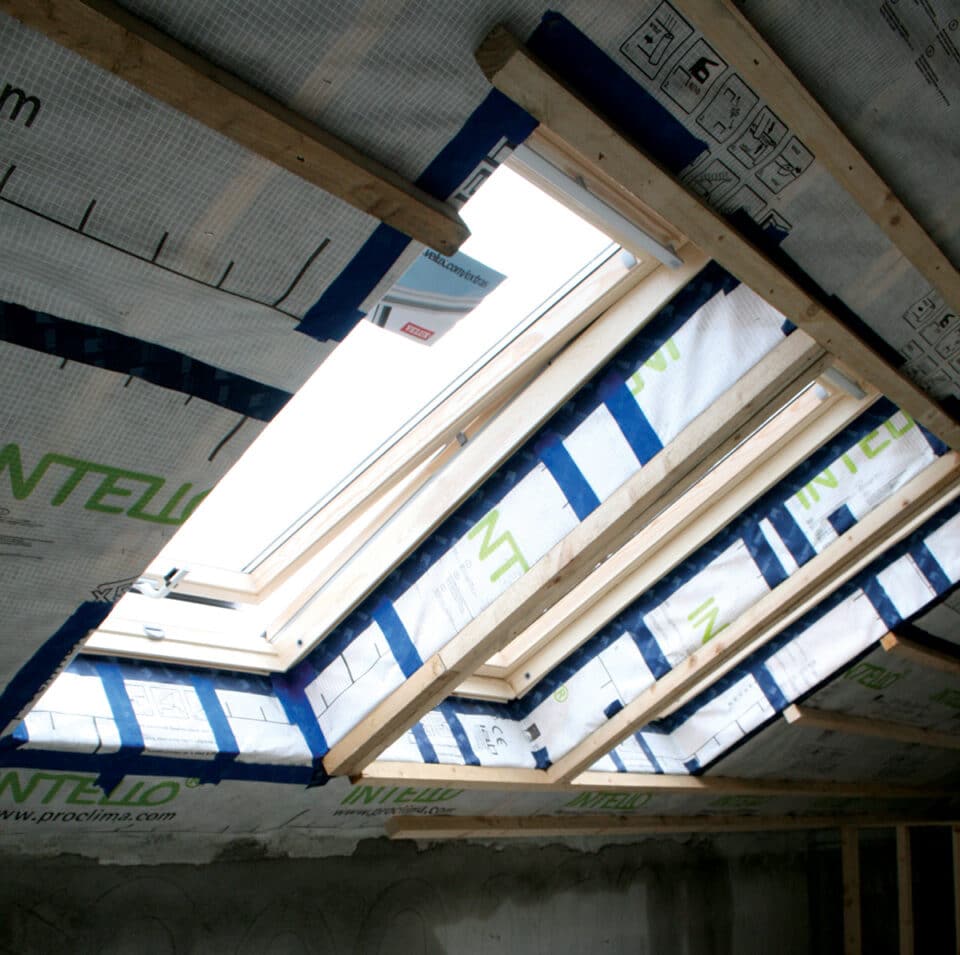
How Passive House Compares to Building Regulations
Current building regulations in Ireland (Part L) set minimum standards for energy performance in new buildings. These standards have improved significantly in recent years, particularly around insulation levels and airtightness.
However, regulations are designed as a minimum compliance threshold. They represent the lowest acceptable standard, not the optimum. Passive House, by contrast, is designed as a fully integrated performance standard where every element of the building works together as a system.
The result is a home that uses up to 90% less energy for heating than a typical older home, and significantly less than even a brand new home built to current regulations.
To understand where building regulations fall short, it helps to walk through the five core principles of Passive House and compare them with how typical homes are currently built in Ireland.
The Five Core Principles of Passive House
1. Superinsulation: Protecting the Biggest Heat-Loss Areas
Think of a house as a container of warm air. The walls, roof, and floor are the largest surfaces through which heat can escape. Passive House begins by heavily insulating these large building elements so that heat loss through them is dramatically reduced.
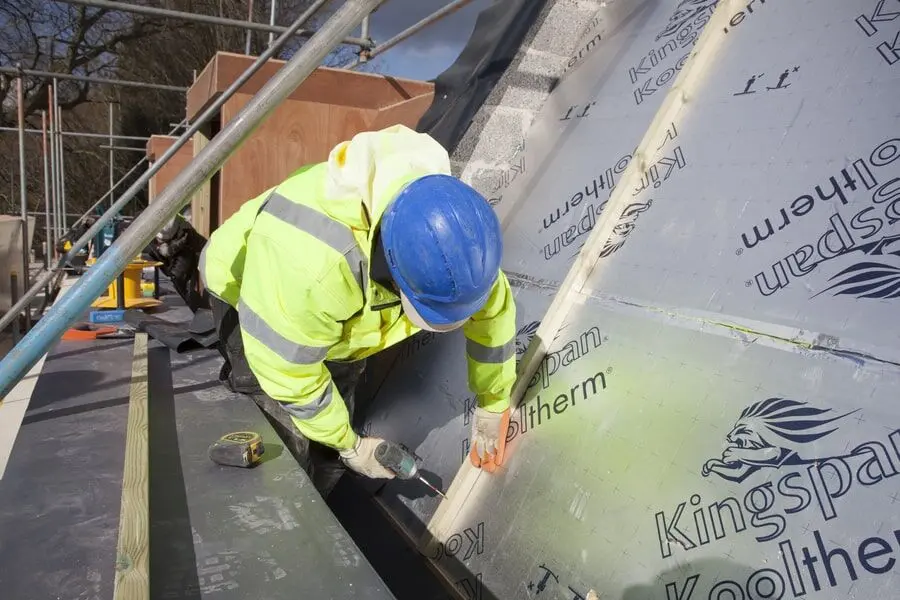
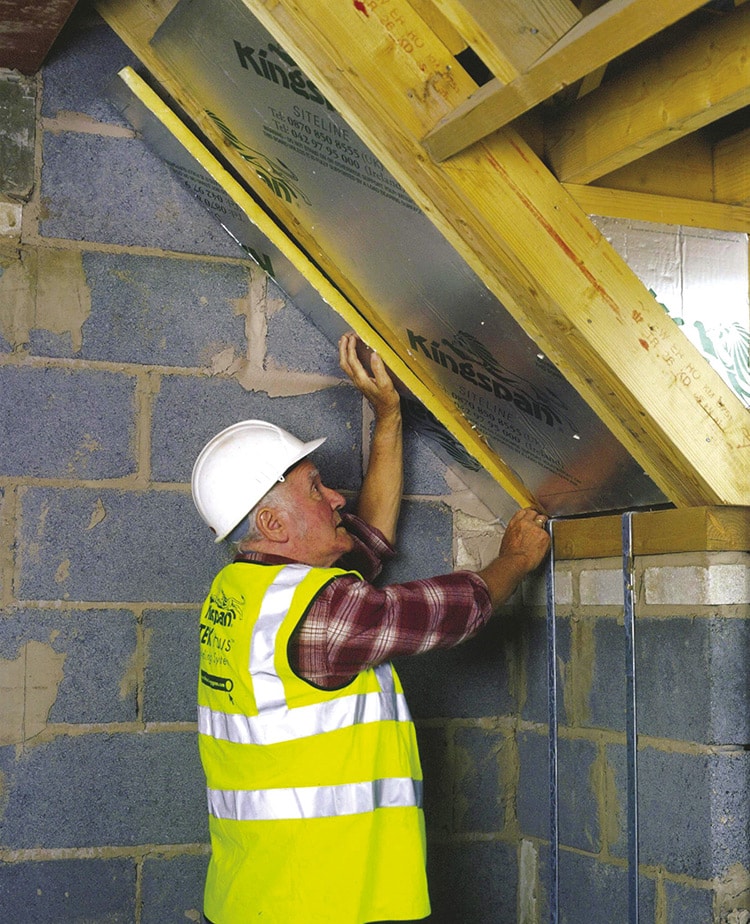
Building regulations already require insulation, but Passive House typically requires thicker and more carefully detailed insulation layers. The difference is not simply about adding more material. It is about ensuring the insulation forms a continuous thermal envelope around the entire building, with no gaps, no weak points, and no shortcuts.
The Passive House standard has effectively calculated the optimum insulation point. Too little insulation and heat loss remains high. Too much and the additional cost begins to outweigh the energy savings. The standard sits precisely at the point where maximum benefit is achieved for minimum additional investment.
At Daniel Mihoc Construction, we understand that insulation is only as good as its installation. Continuity, detailing, and quality of workmanship are what separate a well-insulated home from a truly high-performance one.
2. High-Performance Windows and Doors
After the walls, roof, and floor, the next major source of heat loss is the openings in the building envelope, specifically windows and doors. Here the Passive House standard requires high-performance triple-glazed windows and doors with insulated frames and warm-edge spacers.
While double glazing is still common in some builds, triple glazing has become the standard for high-performance homes and is increasingly being adopted as best practice across the industry.
But Passive House goes further than simply specifying better glass. Windows are not just weak spots in the insulation. When designed correctly, they can also be assets. South-facing windows can capture solar heat during winter months while appropriate shading and design limits overheating in summer.
For this reason, Passive House considers window quality, orientation, and solar gain as part of the overall energy strategy, rather than simply meeting a minimum U-value.
Choosing cheaper glazing to save on upfront costs almost always turns out to be a false economy. The performance difference between standard and high-performance glazing lasts for the entire lifetime of the building, which could be 50, 60, or even 100 years.
3. Thermal Bridge Free Design: Eliminating Hidden Heat Leaks
Once the main building elements are well insulated, smaller weaknesses in the building envelope become much more noticeable. These are known as thermal bridges.
Thermal bridges are areas where heat can escape more easily through junctions in the structure, such as where walls meet floors, where roofs connect to walls, at balcony connections, or around window and door frames.
In a typical home built to standard regulations, these cold spots might not be immediately obvious. But when a building becomes highly insulated, thermal bridges become proportionally much more significant. They can account for a large percentage of total heat loss.
Passive House therefore requires designers to carefully model, calculate, and detail every junction so that thermal bridges are minimised or eliminated entirely.
This is also where Passive House begins to diverge most strongly from standard construction practice. In conventional building, a detail might be specified correctly in the design drawings but not always executed perfectly on site. The difference between what is designed and what is actually built is known as the performance gap.
Research comparing measured heat loss in new buildings has found that many conventionally built homes lose 30 to 50 percent more heat than predicted, with some performing up to 250 percent worse than their design calculations suggested.
In contrast, certified Passive House buildings show only a very small difference between predicted and measured performance, typically within 7 to 10 percent. This is because Passive House places strong emphasis on accurate detailing, verification, and documentation throughout the construction process.
At Daniel Mihoc Construction, we understand that precision on site matters just as much as precision on paper. Our teams are trained to deliver the level of detailing and workmanship that high-performance buildings demand.
4. Airtightness: Controlling Uncontrolled Air Leakage
One of the most significant sources of heat loss in any building is uncontrolled air leakage. Warm air escapes through small gaps, cracks, and imperfections in the building fabric while cold air enters to replace it. This happens continuously, 24 hours a day, whether you notice it or not.
Passive House requires extremely airtight construction. The airtightness target is 0.6 air changes per hour at 50 Pascals of pressure (n50). This is tested using a blower door test.
For comparison, building regulations in Ireland typically require homes to achieve airtightness levels of around 5 air changes per hour or below to meet energy targets. In Northern Ireland, new homes can legally be up to 10 air changes per hour.
In simple terms, a Passive House home is roughly 10 times more airtight than the basic regulatory limit in Northern Ireland and several times tighter than typical compliant homes in the Republic.
It is important to note that airtightness is not the same as breathability. Airtightness relates to uncontrolled air leakage through gaps and cracks. Breathability relates to how building materials manage moisture vapour. A well-designed building can be extremely airtight while still allowing moisture to move safely through the structure. The two are not in conflict.
Achieving Passive House levels of airtightness requires careful planning, quality materials, and skilled workmanship. It is not something that can be added as an afterthought. It must be designed in from day one and maintained throughout the construction process.

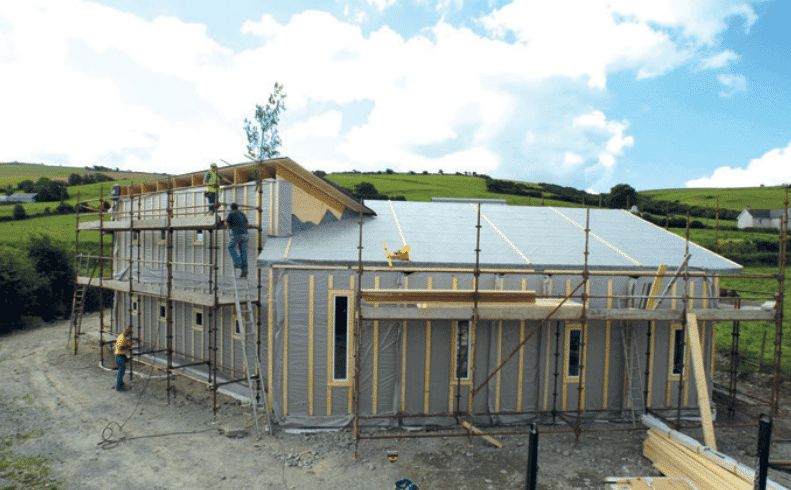
The Performance Gap: Why Passive House Delivers What It Promises
One of the most compelling arguments for Passive House is its proven track record of delivering measured performance that matches predicted performance.In conventional construction, the performance gap is a well-documented problem. Homes that should be efficient on paper often underperform significantly in reality due to poor detailing, installation defects, thermal bridges, and uncontrolled air leakage.Passive House addresses this through rigorous quality assurance, including:
- Detailed energy modelling using the PHPP (Passive House Planning Package) software
- Careful junction detailing and thermal bridge calculations
- On-site airtightness testing during construction
- Documentation and verification throughout the build process
- Independent certification for completed buildings
This systematic approach means that when a Passive House is certified, you can be confident that it will actually perform as designed, not just on a spreadsheet, but in real life, for real people, every single day.
What Is Next for Building Regulations in Ireland?
Building regulations across Europe are steadily moving in the direction of lower energy demand and better airtightness. The introduction of Nearly Zero Energy Building (NZEB) standards and improved insulation requirements are steps in that direction.
However, regulations still tend to focus on minimum compliance rather than optimum performance. Future updates are likely to tighten airtightness limits, improve insulation levels, and place greater emphasis on measured performance rather than theoretical calculations.
In many ways, these changes will gradually bring mainstream construction closer to what Passive House has already been doing successfully for over three decades.
Building regulations are improving, but Passive House remains a step ahead. And as energy prices continue to rise and climate pressures intensify, that extra step may prove increasingly valuable for homeowners, developers, and communities alike.
Why Daniel Mihoc Construction Believes in High-Performance Building
At Daniel Mihoc Construction, we have built our reputation on delivering quality across every sector we work in, from education and healthcare to commercial, residential, and infrastructure projects across Ireland and Europe.We understand that the buildings we construct today will be standing and performing for decades to come. That is why we believe in applying the principles of high-performance construction to every project we deliver.Whether a project is pursuing full Passive House certification or simply applying the core principles to achieve better performance, our teams have the expertise, the training, and the commitment to deliver buildings that perform as designed.Our approach is simple:
- Precision detailing from design through to completion
- Quality materials specified and installed correctly
- Skilled workmanship from experienced, trained professionals
- Rigorous quality assurance at every stage of the build
- Transparent communication with clients about performance expectations and outcomes
Is Passive House Worth It? Our Verdict
The short answer is yes. Passive House delivers:
- Up to 90% reduction in heating energy demand
- Superior indoor air quality and comfort
- Proven, measured performance that matches predictions
- Lower running costs for the lifetime of the building
- Reduced carbon emissions and environmental impact
- Higher property values and future-proofing against rising energy costs and tightening regulations
The additional upfront cost of building to Passive House standard is typically in the range of 8 to 15 percent above standard construction costs. This premium is paid back through energy savings over a relatively short period, after which the building continues to save money every single year for its entire life.
In a world of rising energy prices, climate uncertainty, and increasing regulatory requirements, building to the highest proven standard is not an indulgence. It is common sense.
Final Thoughts
Ready to Build Better?
If you are planning a new build in Ireland and want to explore Passive House or high-performance construction, Daniel Mihoc Construction would love to hear from you. With over 250 projects completed across 60+ locations and a team of 500+ professionals, we have the experience and expertise to deliver buildings that truly perform.
Let’s build smarter, together, with a focus on quality, longevity, and real impact.