Rising Damp: How to Deal With Moisture Problems in Your Home
If you are of a certain age, the words “Rising Damp” probably bring back memories of Leonard Rossiter as the unforgettable Rigsby, prowling the corridors of his crumbling boarding house, ignoring every building defect known to man, and blaming his tenants for problems that were clearly the fault of the building itself.
As Rigsby himself might have said, “There’s nothing wrong with this house that a bit of paint won’t fix.” Unfortunately, that attitude is still alive and well in how many people approach damp and moisture problems in their homes today.
But unlike Rigsby’s boarding house, your home deserves better. And at Daniel Mihoc Construction, we believe that understanding the real cause of damp, and fixing it properly, is always worth the investment.
Mould Is Everywhere. The Environment Decides What Grows.
Here is the reality. Mould spores exist in every home, every building, every room you have ever walked into. Whether they grow depends entirely on the indoor environment.
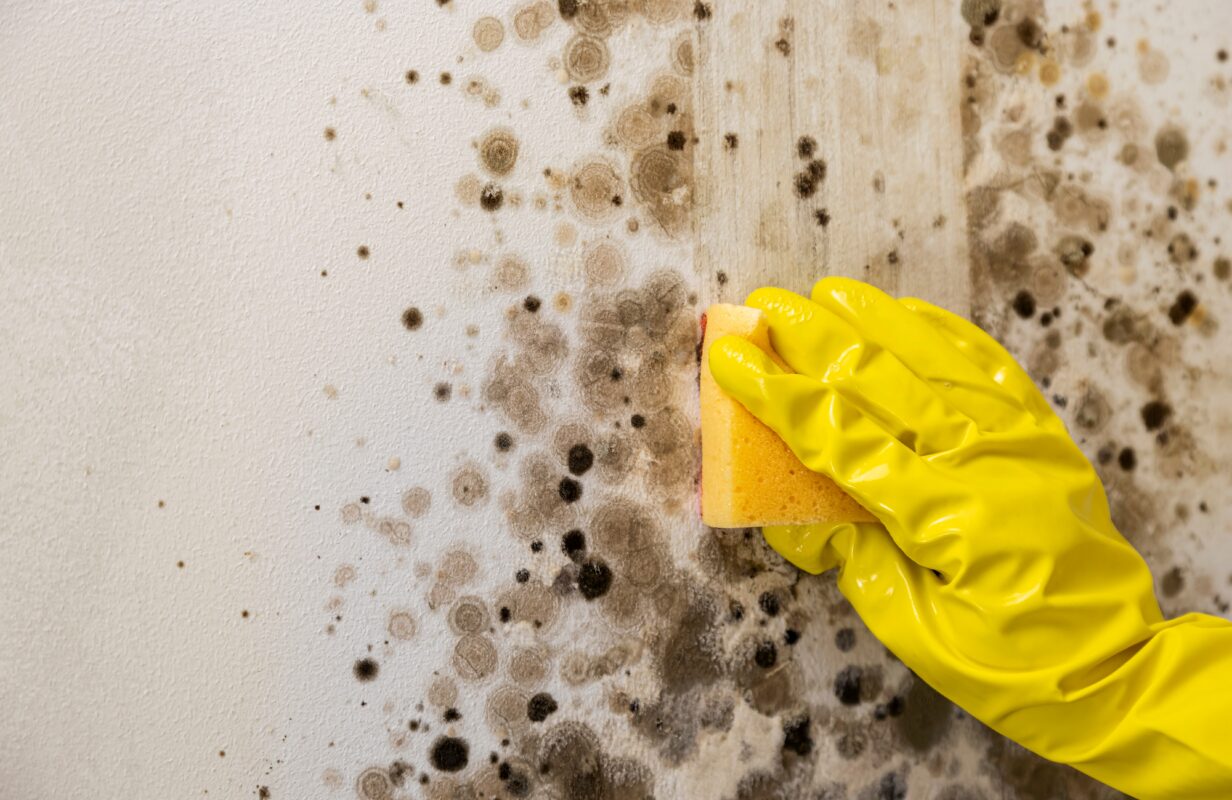
Black mould tends to appear when a surface falls below approximately 12 to 13 degrees Celsius at normal humidity levels. That is all it takes. A cold wall, a poorly ventilated corner, a window reveal that never sees sunlight, and mould will find a way.
Passive House design, for example, keeps all internal surfaces above roughly 17 degrees specifically to prevent this. Warm surfaces combined with controlled ventilation prevent mould far more effectively than any chemical spray, anti-mould paint, or bleach solution you can buy.
The bottom line is simple. Moisture problems are always building performance issues. They are signs that something is not working properly. The long-term solution is always environmental: ventilation, warm surfaces, and appropriate materials.

The Industry Standard: Covering Up Rather Than Fixing
Rigsby’s approach to property maintenance was legendary. “If you can’t see it, it isn’t there.” Unfortunately, the construction industry has taken a similar approach to damp for decades.
The priority has often been to make walls look clean and finished rather than to understand the root cause of the problem. What we see repeatedly is that many projects still specify wall build-ups that do not suit older buildings. The understanding of moisture behaviour is often incomplete, and well-intentioned upgrades end up trapping moisture, hiding decay, and creating mould that always comes back.
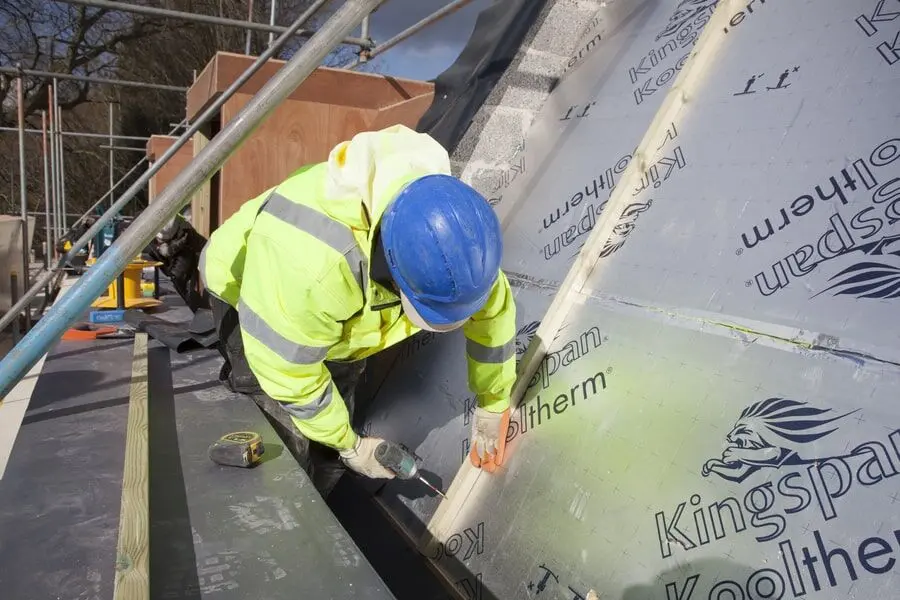
One of the most damaging and widespread mistakes is the internal dry-lining of solid walls with plastic-based insulated plasterboard, including foil-backed boards. On paper it looks neat and convenient. In reality, it traps moisture between the original wall and the vapour-tight lining with almost no ability for that moisture to escape. It becomes a hidden environment where mould thrives unseen.
Some attempt to ventilate the cavity behind the insulated plasterboard by adding small vents to the outside. In theory it sounds sensible. In practice it is rarely carried out correctly and often leads to excessive heat loss. It is not a reliable or efficient solution.
What Is the Right Humidity Level?
The optimum indoor humidity sits between 40 and 60 percent. Fresh air should be provided at roughly 30 cubic metres per person per hour. These are the conditions that avoid dry air irritation on one end and the health and mould risks of excess moisture on the other.
This is precisely why Passive House specifies these conditions. It is not arbitrary. It is based on decades of building science research.
Airtightness Is Not the Problem. Lack of Ventilation Is.
Airtightness gets blamed repeatedly for moisture issues, but airtightness itself is not the culprit. The real issue is the lack of proper ventilation and the confusion between airtightness and breathability. They are completely different concepts, and mixing them up leads directly to moisture problems in both new builds and older homes.
Both Republic of Ireland and Northern Ireland regulations now require airtightness testing, yet they still do not require proper mechanical ventilation in all cases. A house can achieve an excellent airtightness score while relying almost entirely on trickle vents. That is not a ventilation strategy. That is guesswork.
Mechanical Ventilation with Heat Recovery (MVHR) is what ties everything together. It provides continuous fresh air, keeps humidity stable, retains heat, and ensures every internal surface stays warm enough to avoid mould. It is one of the most important components of a modern, well-performing home.
Without proper ventilation, you are simply heating damp air and encouraging moisture to settle on the coldest surfaces. As Rigsby might say, “I keep the heating on, what more do they want?” Quite a lot, as it turns out.
How to Prevent Mould: The Right Approach
For solid walls in older buildings:
If you are insulating internally, breathable materials such as wood fibre insulation, insulating lime plasters, and breathable paints are the safest options. They allow moisture to move and dry naturally, greatly reducing the risk of condensation. They cost more, but they protect both the building and the people living in it.
For retrofits where full MVHR is difficult:
- Decentralised MVHR units work room by room, tackling moisture at its source and recovering heat effectively.
- Attic-based MVHR systems sit in the roof space and use short ducts to serve rooms below, offering a balanced solution for many retrofit projects.
- Centralised MVHR remains the most efficient option, recovering 80 to 90 percent of heat, but requires continuous ducting routes that are not always feasible in existing buildings.
Practical daily habits that help immediately:
- Reduce steam from cooking and showers where possible
- Avoid drying clothes indoors without adequate ventilation
- Pick one consistent time each day to open windows for 15 to 20 minutes. A daily purge works far better than random ventilation
If mould has already appeared:
- Strip paint and clean with Hydrogen Peroxide
- Treat with Benzalkonium Chloride
- Finish with anti-mould paint
- Then fix the environment permanently
Treating mould without fixing the environment is temporary. It will always come back.
Final Thoughts
Fix the Environment, Not the Symptoms
Unlike Rigsby, who believed that ignoring a problem long enough meant it would eventually go away, we know that damp and moisture issues only get worse when left unaddressed.
At Daniel Mihoc Construction, we take a building science approach to every project. Whether it is a new build designed to Passive House principles or a retrofit of an older property, we understand that warm surfaces, controlled ventilation, and appropriate materials are the only permanent solution to moisture problems.
Never assume that a coat of paint, a sheet of foil-backed plasterboard, or a can of anti-mould spray will solve the problem. Fix the environment and the mould disappears for good.
If you are dealing with persistent damp or planning a build and want to get it right from the start, we would love to hear from you.
Let’s build smarter, together, with a focus on quality, longevity, and real impact.