
Safety First, Always: A Human Guide to Staying Safe on Irish Building Sites
Daniel Mihoc ConstructionWalk onto a busy site in the morning and you’ll feel it the hum of plant starting up, the clatter of tools, the quick nods between crews who know each other’s rhythms. At Damian Mahon Construction, we love that energy. But we love something even more: seeing everyone go home safe, every single day.
This isn’t a lecture. It’s a practical, human guide to what really keeps people safe on Irish building sites what you need before you step through the gate, how we work together on site, and the everyday habits that protect lives, timelines, and reputations.
Note: This is general guidance aligned with Irish best practice (HSA guidance and the Safety, Health and Welfare at Work Act/Construction Regulations). Always follow your site‑specific induction and method statements.
The Non‑Negotiables Before You Step on Site
Daniel Mihoc ConstructionIf you only remember one section, make it this. On Daniel Mihoc Construction projects, you must have:
- Valid SOLAS Safe Pass – Proof you’ve completed basic safety awareness training in Ireland.
- Site induction completed and signed – You’ll learn emergency procedures, hazards, traffic routes, welfare facilities, and site rules.
- PPE as standard – At a minimum: hard hat, steel‑toe safety boots, and a hi‑viz vest/jacket.
- Eye and hand protection – Safety glasses and work gloves appropriate to the task (cut level as required).
- Hearing protection – Ear defenders/plugs where noise assessments require it.
- If applicable: CSCS card for plant/machines, manual handling cert, and task‑specific training (MEWP, scaffolding, abrasive wheels, working at height).
No Safe Pass, no induction, no entry. Not to be awkward just to be safe.
What “Safety First” Looks Like in Real Life
Safety isn’t a poster; it’s the way we work.
- Talk before tools. We brief the task, review the risk assessment/method statement (RAMS), and agree roles. Five minutes here saves five hours later.
- Keep routes clear. Good housekeeping prevents slips, trips, and panicked phone calls. Clear walkways, tidy leads, segregated waste.
- Respect exclusion zones. Lifts, excavations, and crane swings are no‑go without permission and control.
- Lock‑out, tag‑out (LOTO). Live services kill. We isolate, verify, and control before we touch.
- Report it early. See it, say it. Near‑miss today is an incident avoided tomorrow.
Working at Height: Where Small Mistakes Have Big Consequences
Most serious injuries happen here. So we do it right or we don’t do it.
- Edge protection and fall prevention first; fall arrest only if there’s no alternative.
- Scaffolds are erected/inspected by competent, certified people and tagged before use.
- MEWPs need trained operators and controlled ground conditions. Harnesses and lanyards as required.
- Fragile surfaces and openings are guarded, covered, and labelled no exceptions.
If you’re unsure, you’re not ready to climb. Ask.
Plant, Traffic, and Lifting: Big Gear, Big Rules
- Separate people and plant with barriers and marked pedestrian routes.
- Banksmen and spotters for reversing and tight manoeuvres.
- Daily checks on excavators, telehandlers, forklifts defects fixed before operation.
- Lifting plans and competent riggers for cranes and chain slings; no ad‑hoc lifts.
Excavations and Underground Services
- Locate before you dig utility surveys, permits, and CAT/GENNY scanning.
- Safe access/egress, shoring, or battering for trenches; inspect after rain and at start of shift.
- Spoil heaps set back from edges; barriers and signage in place.

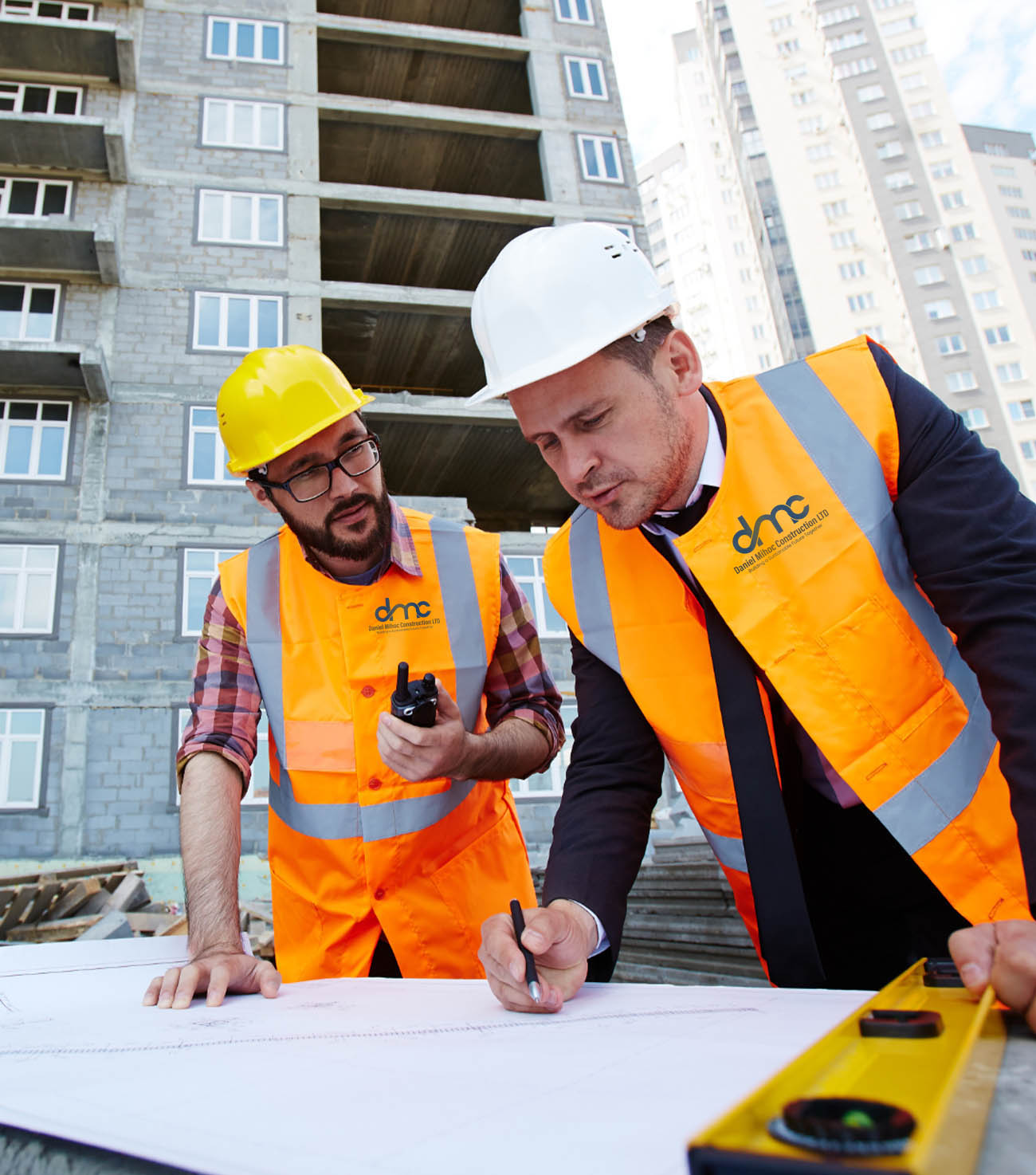
Tools, Permits, and the Right Gear for the Job
- Permits for hot works, confined spaces, roof access follow the controls to the letter.
- Abrasive wheels, nail guns, cutting tools – trained users only; guards fitted; sparks and dust controlled.
- Dust, fumes, and silica – water suppression, extraction, and RPE where required.
Emergencies, First Aid, and Well‑Being
- Know the plan – fire points, muster locations, first‑aiders’ names, and AED locations.
- Hydrate, rest, rotate – fatigue and heat/cold stress are real risks.
- Mind each other – if someone looks off‑form, check in. We’d rather pause than push through a risk.
Our Commitment at Daniel Mihoc Construction
- Leadership that shows up. Supervisors and managers lead by example-PPE on, shortcuts off.
- Toolbox talks that matter. Short, relevant, and two‑way. Your voice counts.
- Right kit, right time. We provide safe access, maintained plant, and quality PPE.
- Stop‑work authority. If it isn’t safe, we stop and fix it no blame for speaking up.
We’re builders. We’re problem‑solvers. And safety is part of how we build every day, on every site.
Quick Checklist: Standard Site Entry Essentials
- Safe Pass (valid and available)
- Photo ID and contractor/company sign‑in
- Site induction completed
- PPE: hard hat, steel‑toe boots, hi‑viz, safety glasses, gloves, hearing protection (as required)
- Certs as needed: CSCS, manual handling, MEWP/Scaffold/Abrasive Wheels
- Emergency info: muster point, first aid, supervisor contact
Ready to see what the future of construction can do for your next project? Let’s build something extraordinary -together.